Walker Learning Prep- Year 2
Our approach to teaching and learning in the early years is based on the work of renowned early childhood educator, Kathy Walker. It provides children with rich opportunities to learn through a mix of active investigation alongside explicit, formal instruction.
The Walker Approach aligns with our BGSS priorities of preparing our students as 21st century learners. Our goal is to create learners that have the skills to think, problem solve, risk take, communicate, collaborate and create.
The Walker Learning Approach is a teaching and learning approach that provides the catalyst for rich and deep learning experience for students. Within this approach, students are highly engaged and active learners. They are asking questions, exploring topics deeply and linking real-life relevance to the content they explore. Students have the opportunity to engage in investigations which challenge and allow them to explore, investigate, design and wonder.
The aims of WLA include:
- To build a bridge between the preschool and early years of school
- For all children to engage deeply and meaningfully with their learning environment
- For children to learn that the skills of literacy and numeracy are meaningful and useful parts of everyday life
- For children to have more authentic learning opportunities
- For children to enjoy school
- For children to have more authentic and frequent opportunities to have their learning personalised
Our students are thoroughly engaged in their investigation in the Prep to Year 2 classrooms and articulate clearly their thinking, questioning and wonderings.
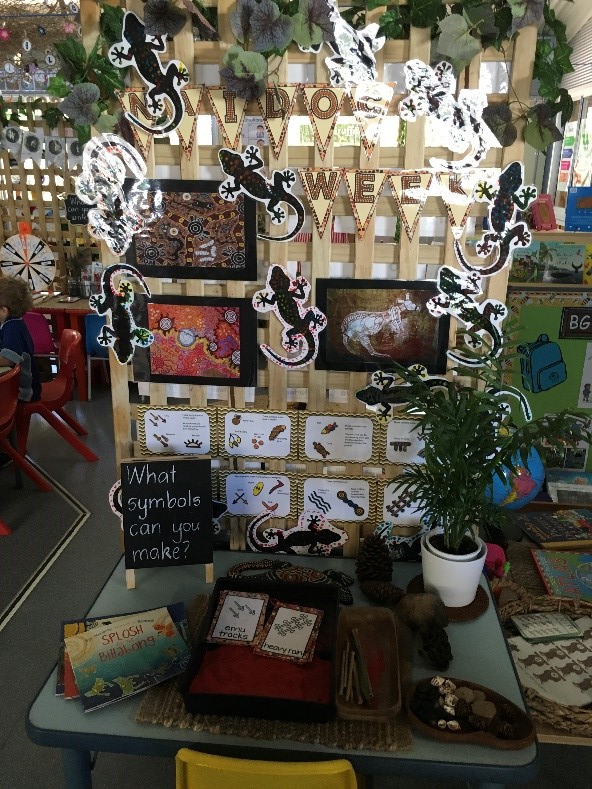
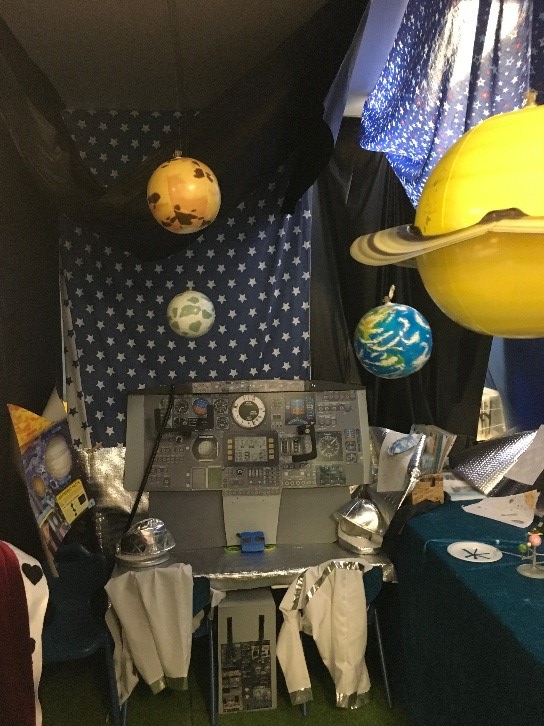
The classrooms are a welcoming learning environment with intentional learning spaces designed to promote skills and learning through open-ended investigations.
The key elements of Walker Learning in these Early Years include:
- Tuning in and Reflection
- Investigations - 40 mins, four times a week
- Children's interests linked to Learning Intentions
- Focus children, Reporter, Photographer
- Common language across all year levels
- Scaffolded links to explicit teaching in Literacy, Numeracy, Science and Humanities
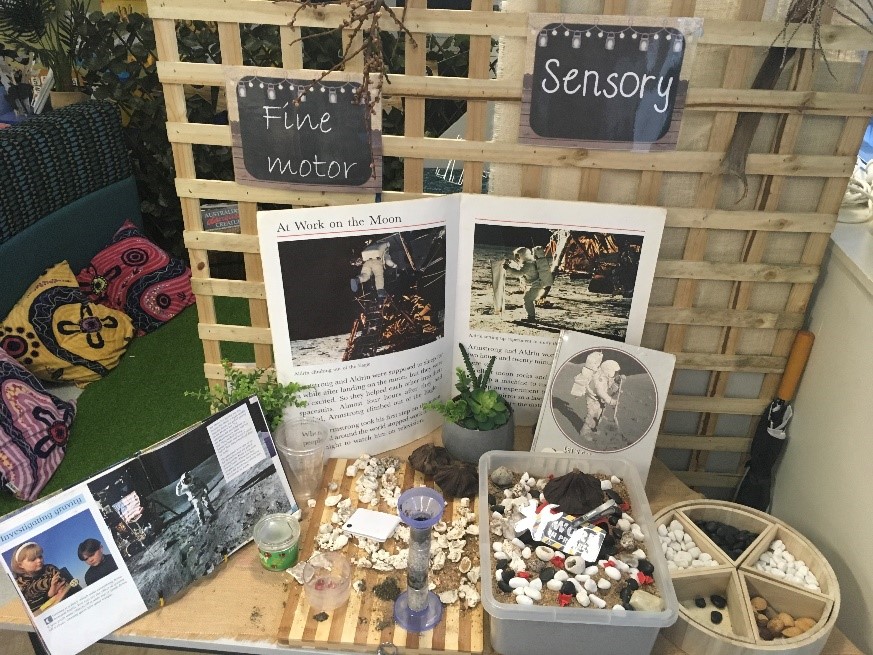
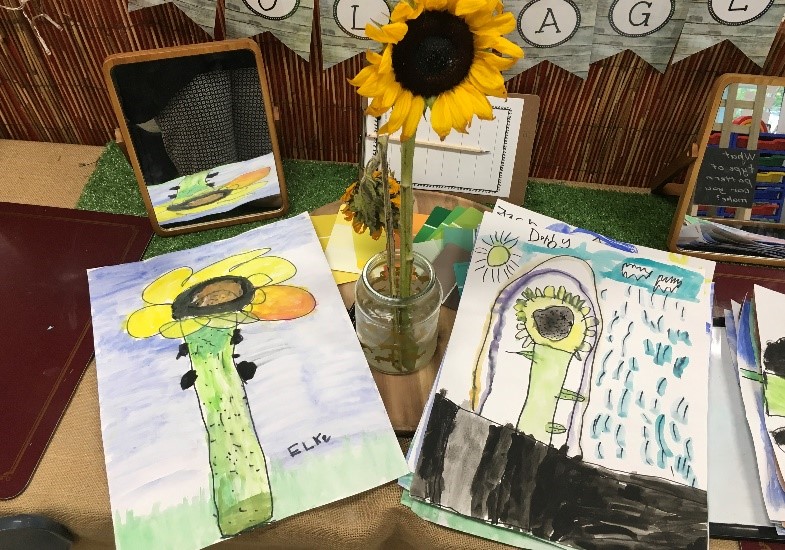
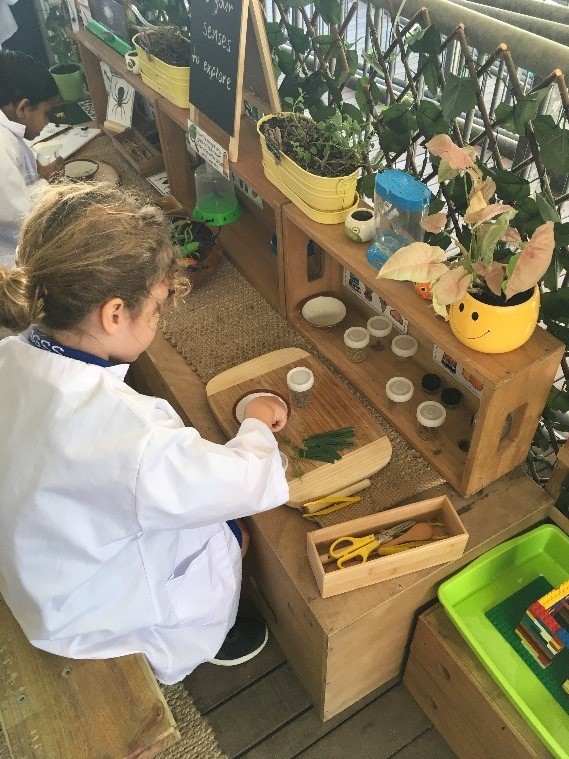
During Investigations, which occurs in the morning for 40 minutes four times per week, the children are given the opportunity to explore ideas and interests in a developmentally appropriate way. The investigation sessions occur within a number of learning centres which are open-ended, purposeful and are linked to the explicitly stated learning intentions. These learning centres include areas for role play, collage, sensory, construction, literacy and numeracy. The investigation time encourages the students to co-operatively share space and resources with each other and provide an opportunity to develop their oral language and negotiation skills. During investigations, the teachers work as facilitators, recording detailed notes on the focus children and observing individual development. The teachers work with the students to encourage them to think deeply, make connections, build on their strengths and skills and to articulate their learning. Each day, children are given specific roles such as a photographer or reporter who then share their recordings and observations during reflection time, which is a whole group discussion once investigations have concluded.
Walker Learning Year 3-6
Engagement Matters
Belgian Gardens State Schools approach to teaching and learning in the upper years of primary school continues the work of renowned educator, Kathy Walker providing a seamless link between how children learn in the early years and their transition to the middle years of schooling.
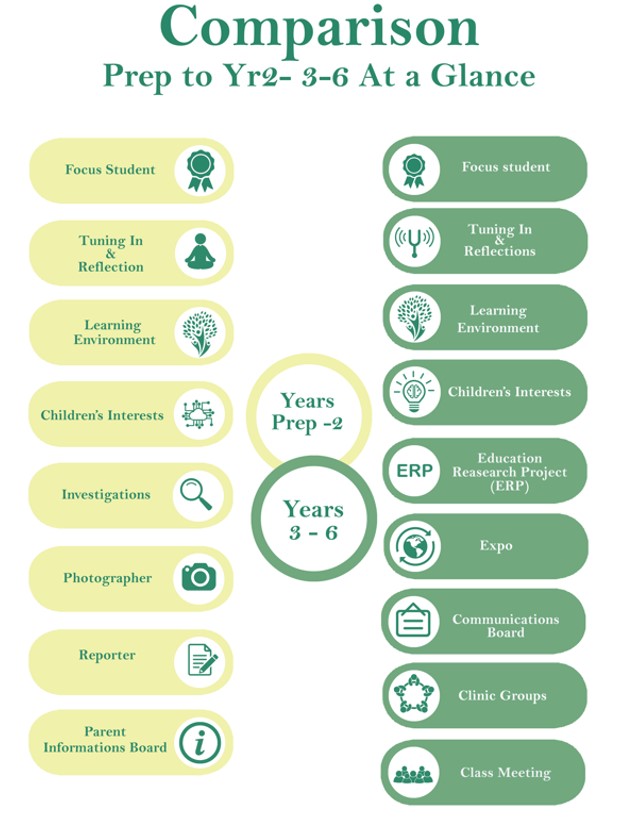
It encompasses appropriate practices to engage students in their learning and to develop the skills necessary for 21st Century learning at a different developmental stage. The students continue to develop their skills and knowledge through a number of new elements. There are elements that continue from P-2 Walker Learning (Play Matters) and some elements in Year 3-6 Walker Learning change completely. Because the brain changes significantly around Year 3, that is significant neurological changes around 7 and 8 years old, so Walker Learning changes too. Please refer to the image for elements of each Walker Learning aspect.
Parent information sessions are held each year for parents to learn more about our Walker Learning pedagogy.